
 Available in GB
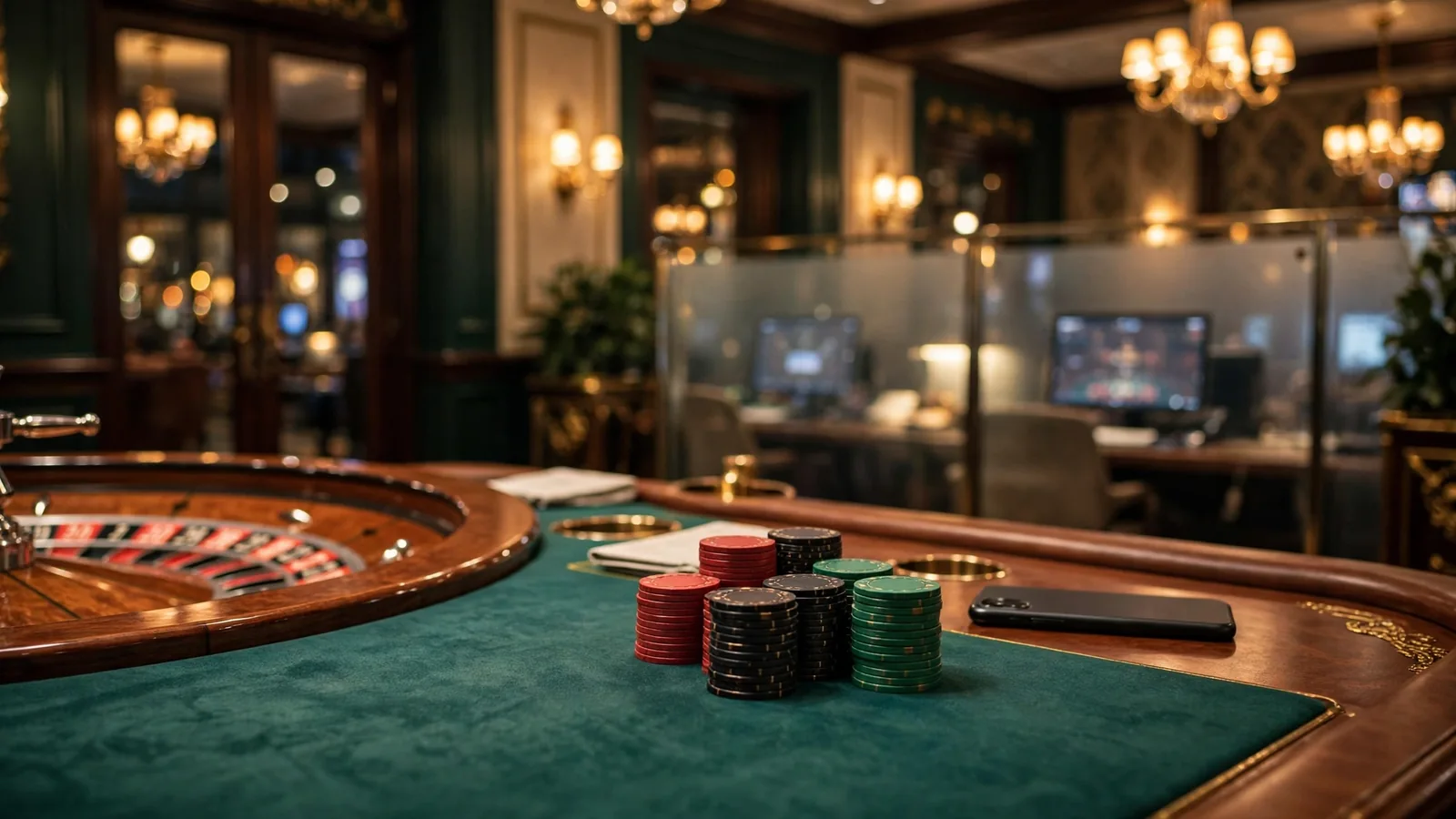
European location, game labels and self-exclusion claims do not by themselves verify a casino’s status or protections.
“Not on GamStop” describes a relationship with a self-exclusion scheme, not a reliable category of casino by country, ownership or game selection. A site described as a European casino may be based in Europe, serve customers in several countries or use an overseas licence. None of those descriptions, on its own, establishes whether it is authorised to offer gambling to people in Great Britain or whether it participates in GamStop.
The regulatory distinction is more consequential. Remote gambling operators that offer services to customers in Great Britain must hold the relevant licence from the UK Gambling Commission, regardless of where the business is based. Online gambling is legal in Great Britain at sites operating under the required UK licence. A casino located elsewhere in Europe is not exempt from that requirement merely because it is European. Conversely, an operator outside the UK regulatory system does not become part of it because its website accepts British customers or describes itself as an online European casino.
GamStop has a narrower function than licensing. It is a multi-operator self-exclusion scheme: a person who registers is blocked from accessing gambling accounts and opening new accounts with participating licensed online operators across the UK. The scheme applies across participating websites and apps rather than being limited to one casino. It is free to use. The Gambling Commission made participation compulsory for online operators from 31 March 2020, establishing GamStop as a required part of the UK-licensed online sector.
That requirement does not mean that every website a British player can reach is covered. A site outside the UK regulatory system may not participate in GamStop, but being absent from the scheme is not evidence that it has been assessed as safe, suitable or legally authorised for the British market. “Non GamStop European casinos” therefore combines two separate ideas: a site’s apparent geographic connection and its relationship to a self-exclusion scheme. Neither, by itself, gives a complete account of its regulatory status.
Non-UKGC Licensed Casinos: Rules and Risks
The phrase can also obscure what self-exclusion is intended to do. GamStop is designed to restrict access across participating licensed online gambling businesses, not to certify or recommend alternatives beyond its scope. A person who has excluded themselves should not open an account elsewhere to get around that decision. Playing at non GamStop casinos could breach the terms of a self-exclusion agreement, even if a particular site does not block access through the scheme. Self-exclusion is a formal commitment not to gamble, and it is important to exclude from all places where gambling may be tempting.
Gambling businesses must offer self-exclusion by law. A person can seek exclusion from an individual gambling business as well as register through a multi-operator scheme. These routes differ in reach: an individual request concerns that business, while GamStop is intended to apply across participating licensed online sites and apps. Neither should be confused with a general permission to gamble elsewhere. The existence of a route that is outside a particular scheme does not cancel an existing self-exclusion commitment.
Casino Not on Gamstop Instant Withdrawals: UK Guide
The scope of GamStop also needs to be described precisely. It covers participating licensed online gambling websites and apps; it is not a universal block on every gambling service, nor does the scheme itself turn an unlicensed operator into a regulated one. The name “European” cannot settle these questions. A company’s location, the audience it seeks and the licences under which it operates are distinct matters, and a label on a website is not enough to establish them.
For Great Britain, the Gambling Act 2005 governs gambling in England, Wales and Scotland; Northern Ireland has a separate legal framework. Accordingly, statements about the UK online licensing system should not be treated as a complete account of Northern Ireland’s arrangements. Within Great Britain, however, an operator’s location abroad does not remove the licensing requirement when it offers remote gambling to local customers.
A UK-licensed operator’s participation in GamStop and an overseas site’s apparent availability are therefore not equivalent forms of assurance. GamStop is a protective exclusion mechanism within the participating licensed online sector. It is not a directory of European casinos, a quality rating or a guarantee that every gambling website accessible from Britain follows British requirements. The Gambling Commission cannot provide refunds for money lost through gambling. That makes it important not to treat access outside GamStop as a way to reverse or bypass a self-exclusion decision.
Self-Exclusion Risk
A person who has excluded themselves should not open an account elsewhere to get around that decision, as playing at non GamStop casinos could breach the terms of a self-exclusion agreement.
The phrase “European online casino” can describe several different things: a business based in Europe, a website available in a European country, or a casino offering games associated with the region. Those descriptions are not interchangeable. A European connection, by itself, does not establish whether a business may legally offer real-money gambling to customers in Great Britain or whether its protections meet British requirements.
For the British market, the key question is not whether a casino is European in a broad geographical sense. Remote gambling operators that serve customers in Great Britain must hold the relevant UK Gambling Commission licence, regardless of where they are based. Online gambling is legal in the UK only through licensed and regulated sites. A business operating from another European jurisdiction may therefore still fall outside the UK regulatory system if it does not hold the required British licence.
Non-UK Licence Casinos: Regulation and Player Protections
That distinction matters when considering labels such as “European casino online” or “European online casino sites”. A country name, European language, or regional theme does not establish a site’s licensing position. Nor does a broad regional label show how a particular operator handles customer accounts, complaints or self-exclusion. Such matters are operator-specific and cannot be inferred from geography alone.
A regional description may identify a company’s claimed location or the market it says it serves. It does not, on its own, establish that the operator is authorised to serve people in Great Britain. The British licensing requirement applies to remote operators serving this market even when their business is established elsewhere.
This is why a list of European casino sites should not be treated as a list of legal options for British customers. The same distinction applies to descriptions such as “new European online casino sites” or “best European online casino”. “New” and “best” are not regulatory categories, and neither term confirms that a site has a UK Gambling Commission licence. A ranking also depends on what is being compared; without transparent, consistent criteria and operator-specific evidence, it cannot support a reliable conclusion about suitability for the British market.
A site’s own description is not a substitute for regulatory status. Likewise, a casino’s presence in another country does not mean that British rules apply to it or that British protections are available. The practical point is limited but important: the word “European” does not answer the question of whether an operator is licensed to offer gambling in Great Britain.
GamStop is the national online self-exclusion scheme for Great Britain. It enables players to ban themselves from gambling with UK-licensed online casinos through a single scheme. Its purpose is self-exclusion across participating licensed online gambling websites and apps, rather than a certification or recommendation of casinos.
This makes GamStop relevant to the meaning of “non GamStop” in a British context. The label indicates that a site is outside the scheme; it does not establish why the site is outside it, where it is legally permitted to operate, or what protections it provides. In particular, being outside GamStop should not be read as evidence that an operator is an alternative approved for British customers.
GamStop Scope
GamStop is a multi-operator self-exclusion scheme that blocks access to participating licensed online gambling websites and apps in Great Britain; it is not a universal block on every gambling service.
For anyone who has registered with GamStop, using a site outside the scheme to continue gambling could conflict with the purpose or terms of that self-exclusion. Opening an account elsewhere to get around an exclusion is not a safe substitute for maintaining it. Self-exclusion is intended to support a decision not to gamble, and the relevant protections depend on the operator and scheme involved.
The scheme’s scope should also be kept distinct from the wider question of European licensing. GamStop’s role concerns self-exclusion with participating licensed online operators in Great Britain. It does not determine whether every business described as European is licensed in the UK, nor does a site’s regional identity establish its relationship to the scheme.
The search for the best online European casino can suggest that sites are readily comparable as a single group. In practice, a regional label does not provide a common basis for comparison. Operators may be subject to different national systems, and a claim about one business cannot be transferred to another simply because both are described as European.
A meaningful assessment for a British customer would need to distinguish the operator’s location from its authorisation to serve Great Britain. It would also need to avoid treating a promotional description, directory entry or regional category as proof of the protections available on an individual site. Without operator-specific assessment, claims about which European casino is “best” would go beyond what the label can support.
Non-Gamban Casinos in the UK: What the Label Means
The same restraint applies to any list of European online casinos. A list may gather names under a broad geographic heading, but inclusion alone does not show that those businesses are licensed for the British market or suitable for someone seeking self-exclusion protections. The relevant distinction is between a regional description and a verified regulatory position. GamStop provides a defined self-exclusion route for UK-licensed online casinos; the word “European” provides no equivalent assurance.
A casino described as offering European roulette is making a claim about a particular game, not establishing that the operator is suitable for UK players. The label alone says nothing about the operator’s regulatory status, how a table is configured, or whether the product is currently available. Those points require separate, operator-specific verification.
The same caution applies to online tables and versions presented under similar names. A search result or promotional description may use familiar roulette terminology, but that is not evidence that the actual game matches the description or that an operator has been checked.
This distinction matters because game descriptions can create an impression of assurance that they do not provide. A named roulette variant does not, by itself, confirm who operates the site, what protections apply to an account, or whether the operator is authorised to serve customers in Great Britain. In the UK, remote gambling operators offering services to the British market must hold the relevant Gambling Commission licence. A European location or a European-sounding product label does not replace that requirement.
Non-UK-Registered Casinos: Regulation Explained
Searches for a casino focused on European roulette may also combine several different expectations. Some people may be looking for a particular roulette format; others may be seeking a live table, a specific interface, or a casino presented as premium or VIP. These are not interchangeable claims. Each would need evidence about the named operator and product before it could support a meaningful comparison. The word “VIP” is a promotional description, not proof of higher standards or stronger player protection.
Roulette selection is not separate from account-level safeguards. Self-exclusion is a formal arrangement through which a person asks a gambling company to prevent them from betting with that business for an agreed period. Once excluded, the person should be refused service by the venues and websites covered by that agreement. Gambling businesses are required by law to offer self-exclusion.
The scope of an exclusion is important. An agreement with one company applies to that business; it should not be assumed to cover every other gambling account. A person seeking broader protection needs to consider all places where gambling may be tempting, rather than treating a single excluded roulette account as a complete barrier. This includes resisting the idea of opening another account elsewhere to get around an existing exclusion.
A site described as a non GamStop casino may not be covered by a particular multi-operator exclusion arrangement. That does not make it a safe substitute for an excluded account. Gambling there could breach the terms of a person’s self-exclusion, depending on the agreement and circumstances. A change in the game, table or brand does not remove the underlying commitment not to gamble.
For that reason, a roulette offer should not be assessed only by its game label. The relevant question is also whether gambling is consistent with any self-exclusion in force. If exclusion has been chosen to prevent betting, pursuing a different roulette site undermines that purpose. The existence of a table advertised as European roulette does not alter the restriction attached to an existing agreement.
A responsible comparison would therefore need reliable details about both the specific roulette product and the operator behind it, alongside a clear understanding of how any self-exclusion applies. A list that names casinos without substantiating those points risks presenting marketing language as evidence.
The useful distinction is between a product description and an established account of what is available and who provides it. “European roulette” may identify the type of game being sought, but it cannot establish the quality, regulatory standing or suitability of a casino. Where self-exclusion is active, the priority is to maintain its purpose across all places where gambling might otherwise be considered, not to find a differently labelled route to play.
A deposit search may focus on what happens when an account is funded, but self-exclusion changes the account relationship itself. It is a formal agreement not to gamble, and the person who enters into it remains responsible for observing that commitment. Gambling businesses must provide a way to self-exclude; it is not merely a feature offered at an operator’s discretion.
Once an agreement is in place, the gambling business must close the customer’s account, return any funds remaining in it and remove the customer’s details from its marketing databases. These steps are distinct: returning an account balance is not the same as reimbursing money already spent gambling. The Gambling Commission cannot provide refunds for gambling losses.
Attention The Gambling Commission cannot provide refunds for money lost through gambling; the requirement to return funds applies only to money remaining in the account when self-exclusion occurs.
That distinction matters when considering a European casino not on GamStop or another site that appears to permit account access. Opening an account elsewhere to get around an existing exclusion is not an appropriate response. Gambling at a non-GamStop casino could breach the terms of a self-exclusion agreement, even if the site allows registration or accepts a deposit. An account’s apparent availability does not cancel the commitment already made.
Self-exclusion is intended to prevent further gambling with the business covered by the agreement. Closing the account removes the route to continued play there, while returning remaining funds deals with money still held in the account. Removing marketing details is also part of the operator’s obligations, so excluded customers should not continue to receive promotional messages from that business.
A new European online casino, an offer described as a no-deposit bonus, or access to European slots online does not alter those obligations. Promotional language and the ability to create an account elsewhere do not establish that gambling is consistent with an existing exclusion. The same applies to an account that is described as separate from a previous one: creating another account to bypass self-exclusion can undermine the agreement rather than resolve the restriction.
The scope of an individual agreement depends on the gambling business or scheme with which it was made. That makes it important to treat self-exclusion as a commitment with practical consequences, not as a temporary obstacle to deposits. Where an exclusion has been entered into, account access should not be pursued through another operator as a workaround.
The requirement to return funds applies to money left in the account when the self-exclusion agreement is made. It does not mean that past deposits or losses become refundable. Nor does the regulator act as a route for recovering money spent gambling. Keeping these categories separate avoids interpreting account closure as compensation.
Someone who has excluded themselves from one business may still encounter other gambling opportunities. A search for a top European online casino or a European casino site outside GamStop does not itself show that another account is suitable or safe to use. If gambling remains a concern, the relevant response is to maintain the exclusion and avoid opening accounts elsewhere to defeat it.
Descriptions of European slots and casino bonuses often combine several different claims: where a business is based, which games it offers, and what a promotion may provide. Those claims should not be treated as interchangeable. A European connection, on its own, does not establish the terms of an offer or the suitability of a site for someone who has self-excluded.
The same caution applies to labels such as “best” or “top”. They imply a comparison based on defined criteria and evidence about the options being compared. Without that basis, a ranking would give an unsupported impression of quality. Naming a slot or presenting a bonus as available would also require reliable information about the specific product and its current terms. Promotional wording alone cannot establish those details.
Non-GamStop Curaçao casinos: checking the claims
A headline describing a no-deposit bonus may sound like a definite offer, but the phrase does not explain the conditions attached to it. It does not, by itself, establish who can claim the promotion, how it works, whether it is currently available, or what restrictions apply. Those details matter to the meaning of the offer; without them, the headline is not a sufficient basis for judging its value.
The same distinction matters when an offer is described as European. The regional label does not verify the operator, the promotion or the terms that govern it. Nor does the appearance of a slot in promotional material establish how that game operates or whether it is available to a particular account. Such conclusions require evidence about the particular product and the conditions in force, not an inference from a broad label.
This is not a reason to assume that every promotion is misleading. It is a reason to distinguish a marketing statement from a substantiated description. A claim can be repeated across pages without becoming proof of its terms. Equally, a polished presentation does not establish that a site is appropriate for someone who has excluded themselves from gambling.
A bonus is a promotional inducement; self-exclusion concerns whether gambling should take place at all. The two should not be treated as competing offers, with the promotion considered a reason to reopen access. Self-exclusion is a commitment to avoid gambling with the businesses covered by it, and promotional language does not alter that commitment.
Gambling businesses are expected to take active steps to stop a person who has self-excluded from gambling with them. This is a practical responsibility, not merely a matter of how an offer is worded. If access is not prevented, that does not turn a promotion into permission to gamble. It also does not establish that the person is outside the scope of their exclusion.
A non GamStop casino may still be subject to a person’s own self-exclusion terms. The fact that a site is described as outside GamStop does not show that gambling there is consistent with those terms. Opening an account elsewhere to get around an exclusion is not an appropriate response. Where gambling is a temptation, exclusion should cover the places where that temptation may arise, rather than being treated as a barrier to work around.
Casinos That Bypass GamStop: Coverage and Risks
The expression “European casino” can cover a broad range of businesses and does not identify a particular slot catalogue or bonus policy. A site’s regional identity cannot support a conclusion about the quality of its games or the practical value of its offers. Those questions depend on verifiable information about individual products and their terms.
A responsible assessment therefore separates three things: the existence of a promotional claim, the evidence supporting its details, and whether gambling is compatible with a person’s self-exclusion. A headline may establish only that an offer is being advertised. It cannot establish the complete conditions behind it, and it cannot displace the obligation to respect an exclusion.
For someone who is self-excluded, the relevant decision is not which European slot site has the most attractive bonus. The issue is whether gambling at that business would conflict with the exclusion in place. Promotional claims do not resolve that question, and a claimed opportunity should not be used to justify access that self-exclusion is intended to prevent.
A casino’s European location does not by itself establish that it may lawfully offer real-money gambling to customers in Great Britain. Operators serving the British market must hold the relevant UK Gambling Commission licence, regardless of where they are based. Online gambling is legal for people aged 18 and over when the operator holds that licence. A site’s willingness to accept a UK account is not proof that it is authorised to do so.
Age checks are an essential control, not a formality to be completed after gambling begins. Operators must verify a customer’s age before allowing funds to be deposited into a gambling account. For licensed operators, account controls also include financial limits: new customers must be prompted to set a limit before their first deposit, and the account must provide accessible ways to manage limits.
Self-exclusion is a separate safeguard. Gambling businesses are required to offer it, and a person may ask an individual business to exclude them from that business’s service. This differs from GamStop, which applies across participating licensed online gambling websites and apps through one multi-operator scheme. A single-business exclusion does not, on its own, establish that other businesses have been included.
An exclusion is a formal commitment not to gamble with the business concerned. The business must take reasonable steps to prevent the excluded customer from gambling, and the excluded account should not be treated as a reason to open another account elsewhere. Attempting to gamble at non GamStop casinos while an exclusion is active could breach the terms of that self-exclusion. The appropriate scope is all places where gambling may be tempting, rather than only the first account or venue considered.
The distinction matters when assessing offers described as European casinos for UK players. A site’s country of establishment, game catalogue or stated acceptance of British customers does not replace the requirement for a UK Gambling Commission licence when it serves Great Britain. Nor does an individual exclusion automatically cover every gambling business; its reach depends on whether it is made with one operator or through a multi-operator scheme.
Self-exclusion is a protective measure, not a way to recover money already spent. The regulator cannot provide refunds for gambling losses. If an account or exclusion has not been handled correctly, UK-licensed casinos must provide an internal complaints process and access to an approved Alternative Dispute Resolution service. These safeguards do not make an unlicensed site equivalent to a licensed operator, and an apparent ability to register should not be mistaken for regulatory approval.
Claims that a casino is among the best in Europe depend on evidence that allows meaningful comparison. Relevant details include the operator’s identity, the terms under which it accepts customers, and the standards that apply to its services. A list that does not establish those points can create an impression of endorsement without showing why any entry qualifies.
The same caution applies to lists framed around casino slots or roulette. A title alone does not establish the quality, availability or suitability of a site’s offering. Nor does a European location establish that an operator is authorised to serve people in Great Britain. Remote gambling operators selling into the British market must hold a Gambling Commission licence, wherever they are based. Offshore operators outside that system do not hold a UKGC licence.
Regulatory Realities
For British players, the distinction is material to self-exclusion. Since participation in GamStop became compulsory for UK-licensed online operators in 2020, regulated casinos in the UK have been required to block people who have excluded themselves. A recommendation that treats a site’s apparent availability as proof that it is an appropriate alternative could therefore overlook a significant consequence: gambling at a non GamStop casino could breach the terms of an existing self-exclusion agreement.
A reliable ranking would need to identify the sites assessed and explain the basis for comparison, including their regulatory status and the evidence supporting each claim. Without those elements, labels such as “best” remain promotional language rather than substantiated findings. A list may be useful as a directory, but inclusion alone does not demonstrate that an operator is licensed for the British market or suitable for a particular person.
Interest in European casinos that accept cryptocurrency does not establish that a particular operator, product or payment route has been checked. A crypto payment option also does not determine whether a site is within the UK’s gambling regulatory system. Remote operators offering gambling to customers in Great Britain must hold a UK Gambling Commission licence, regardless of where the business is based. Offshore casinos operate outside that system.
GamStop’s reach is defined by participation and licensing, not by the currency used for a deposit. It is a multi-operator self-exclusion scheme that blocks access to participating licensed online gambling websites and apps. The presence of cryptocurrency as a payment option does not, by itself, show whether an operator participates in GamStop or meets UK licensing requirements.
Separate payment rules apply to UK-licensed remote operators. They cannot accept credit-card payments for gambling, including credit-card funding routed through a money service business. They also cannot accept wallet payments where the wallet permits credit-card funds to be used for gambling. These restrictions concern payment funding; they should not be confused with the scope of a self-exclusion agreement.
Trusted casinos not on GamStop in the UK: key limits
For anyone who has self-excluded, gambling through a non GamStop casino could breach the terms of that agreement. Opening an account elsewhere to get around an exclusion is not a safe response. Self-exclusion is intended to prevent gambling, and businesses must take reasonable steps to stop excluded customers from gambling with them. The scheme’s stated coverage does not mean that every online site is included, so a cryptocurrency label alone cannot establish the practical reach of an exclusion.
A claim that a European crypto casino is suitable for a UK player therefore requires evidence about the operator’s licence, its participation in the scheme and its payment arrangements. Without those details, a ranking or recommendation would be unsupported.
Casino games cover a broad range of formats, including roulette and online slots. A European roulette casino game may be presented as a particular product, but a game’s label alone does not establish that it is available through a UK-licensed operator or that it meets British requirements.
For online slots in Britain, rules apply to how a game operates, not merely to its name or theme. Autoplay is prohibited, and each spin must last at least 2.5 seconds. These requirements are specific to online slots; they should not be assumed to describe roulette or every other casino game.
Stake limits also apply to online slots at UK-licensed operators. The maximum stake per game cycle is £5 for customers aged 25 and over, while customers aged 18 to 24 are subject to a £2 maximum. The £5 limit for all adults took effect on 9 April 2025. These limits concern the stake for a game cycle and do not establish that a particular slot is available or suitable.
The rules for licensed online gambling sit alongside protections that apply at account level. Gambling businesses must offer self-exclusion, and UKGC-licensed casinos must provide responsible gambling tools. Self-exclusion is distinct from a game’s design: it concerns access to gambling accounts, rather than the pace or format of a particular game. A game description should therefore not be treated as evidence that an operator complies with the rules governing its services.
You identify the gambling sites or venues you want to exclude yourself from, provide information to confirm your identity, choose a duration and receive confirmation. The businesses you exclude yourself from must refuse service, close your account, return any remaining funds and remove you from marketing lists.
To leave GamStop, contact the scheme directly and request removal. A 24-hour cooling-off period applies, and operators may take a further 24 to 48 hours to update your status.
GamStop blocks access to your existing accounts and prevents you from opening new accounts with participating UK-licensed online gambling operators. It is free and applies across participating websites and apps.
The 24-hour cooling-off period starts once your identity has been verified, and your exclusion remains active during that period.
For an individual online casino, use its Responsible Gambling or Safer Gambling page to follow the self-exclusion instructions, or contact customer services if you cannot find them.
Published by the goldwincasin team.