
 Available in GB
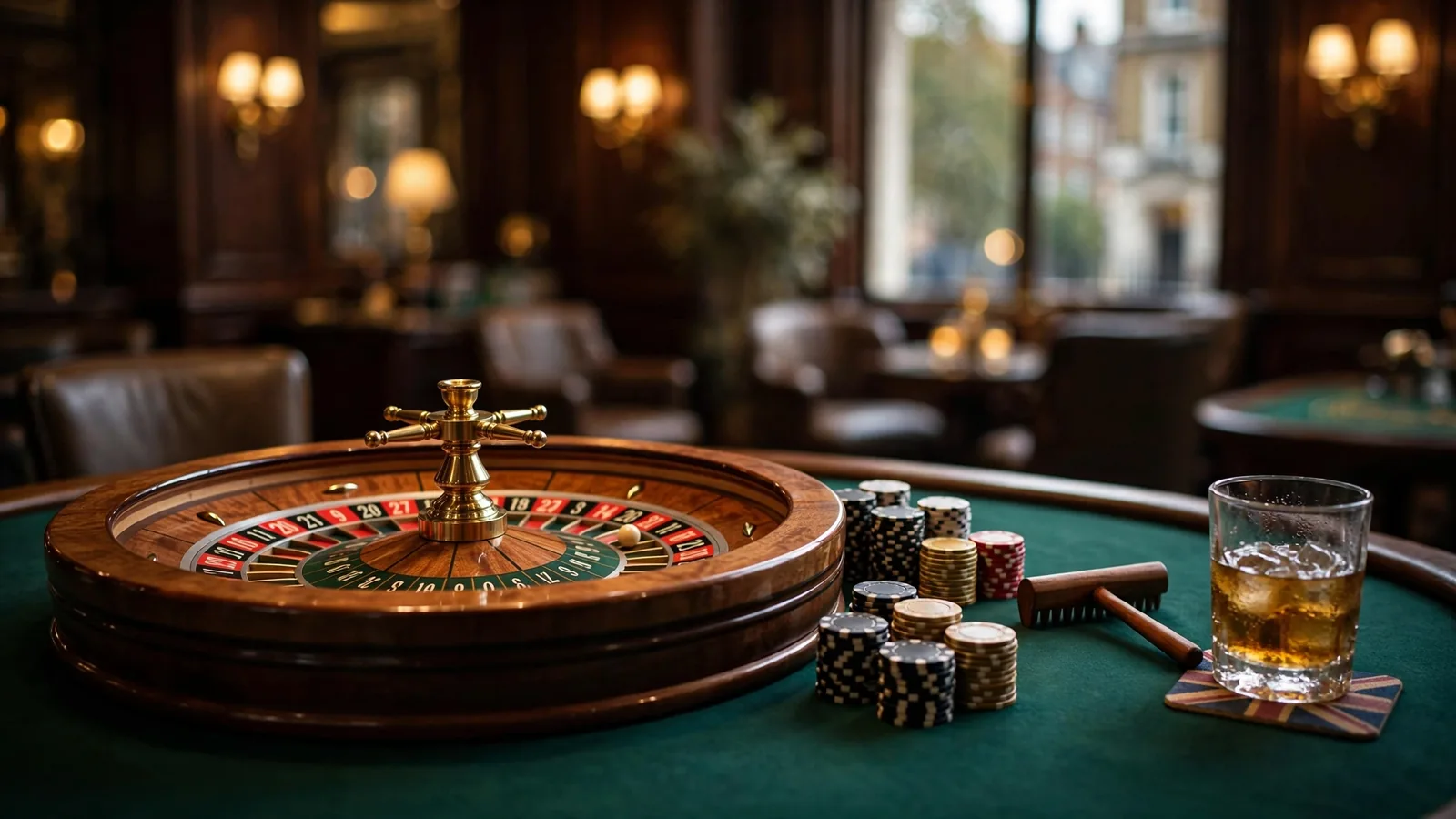
See how the single-zero wheel, La Partage, table formats, limits and payout rules affect online roulette choices.
French roulette belongs to the single-zero family of roulette games. Its wheel has the same basic pocket count as European roulette: numbers from 1 to 36 and one zero, making 37 pockets in total. American roulette adds a double zero, giving it 38 pockets. That additional pocket changes the mathematical position of the game, even though the betting layout may look familiar.
The distinction matters because roulette’s house edge is tied to the relationship between the number of pockets and the payouts. On a European wheel, the standard house edge is 2.70%. On an American wheel, it is 5.26%. The extra green pocket creates another outcome on which a player’s ordinary selection does not win, without changing the standard payouts. French roulette uses the single-zero structure, but its defining advantage comes from rules that can soften the effect of zero on certain bets.
La Partage is the most direct of these rules. It applies to even-money bets, such as red or black, odd or even, and low or high. If the ball lands on zero, half of the stake on an eligible bet is returned rather than the whole stake being lost. The remaining half is lost. Under this rule, the house edge on those bets falls to 1.35%.
This does not make zero disappear from the game. A zero result still prevents an even-money selection from winning, but the financial consequence is smaller than it would be under the ordinary single-zero rule. The reduction applies to the qualifying bet types, not automatically to every wager on the table. A bet on a particular number, for instance, is not an even-money bet and does not receive the same half-stake refund under La Partage.
The value of the rule is therefore specific rather than universal. It changes the treatment of zero for a defined class of bets; it does not alter the wheel’s pockets, make a chosen colour more likely on the next spin, or remove the house advantage across every possible wager. When a French roulette table is described as having a lower edge, the rule attached to the bet needs to be considered alongside the wheel format.
Hi-Lo Casino UK: Understanding Live Game Searches
En Prison offers another way to handle an even-money bet when zero appears. Instead of settling the bet as a loss immediately, the stake is held for the following spin. If the bet wins on that spin, the original stake is returned; it does not produce a profit for the spin on which it was held. If the bet loses, the stake is forfeited. The bet is thus left unresolved after zero rather than being divided into a refunded part and a lost part at once.
The practical difference between the two rules is the route by which the player’s exposure is reduced. La Partage returns half of an eligible stake immediately. En Prison keeps the stake in play for a further outcome, with its eventual return depending on that result. Both rules limit the impact of zero on eligible even-money bets, but they do so differently. The exact table rules determine which treatment applies, so the name of the game alone is not enough to establish how a zero result will be settled.
These rules are relevant to the house edge because they change the expected loss attached to qualifying bets. They do not change the underlying chance of the ball landing on any pocket. Nor do they guarantee that a player will recover a stake: En Prison can still end with the held bet lost, and La Partage still removes half of the original stake when zero appears.
European roulette provides a useful baseline for comparison. Its single zero produces a lower standard house edge than American roulette’s double-zero wheel: 2.70% against 5.26%. French roulette shares the single-zero format, then adds La Partage and En Prison as rules that reduce the cost of zero on qualifying bets. For that reason, French roulette has the lowest house edge among standard roulette variants.
Standard single-zero wheel with a house edge of 2.70%.
Double-zero wheel that increases the house edge to 5.26%.
Single-zero format with La Partage or En Prison rules to further reduce the house edge on even-money bets.
That description needs a qualification. The lower edge is not a blanket property of every individual wager under every table rule. It is tied to how the zero rules apply, particularly to even-money bets. Players comparing games should distinguish the pocket arrangement from the settlement rule: the first determines the wheel’s outcomes, while the second determines what happens to certain stakes when zero appears.
For an online French roulette game, the relevant details are therefore the wheel’s single-zero layout and the stated treatment of even-money bets. A table applying La Partage gives the half-stake refund on zero; one applying En Prison holds the eligible stake for another spin. Without either rule, the presence of a single zero alone does not provide the same protection. French roulette’s advantage is not a prediction about future results, but a defined reduction in the house edge produced by these settlement rules.
French roulette is a distinct title to look for in a casino’s game catalogue, rather than a feature that can be assumed to accompany every European roulette table. A UK casino may offer several roulette formats while omitting French roulette, and the game’s name may not be prominent on the main lobby page. Availability therefore has to be established from the individual operator’s current catalogue.
Fast Casino Payouts in the UK: What the Evidence Shows
A useful starting point is the casino’s roulette category. Where the lobby has filters, selecting roulette and then searching for “French” can narrow the results. A general catalogue search may also find a table that is not displayed among the featured games. If no result appears, that establishes only that the title was not found through those routes; it does not show that every table described as European roulette follows French rules. The game information should identify the format and its rules before play.
This distinction matters because the label alone is not a reliable substitute for the table description. French roulette is associated with particular rules, but a title or promotional image may not make clear which rules apply to a specific game. The table’s information panel is the relevant place to confirm what is offered. A familiar roulette layout, dealer presentation or provider name does not by itself establish that the game is French roulette.
Some catalogues group games by provider, while others sort them by format or popularity. Consequently, a title can be present but less visible than games promoted on the casino’s home page. Searching within the roulette section, checking any available category filters and reviewing the game’s own information are more direct ways to establish availability than relying on broad claims about a casino’s overall selection.
French roulette online casinos may provide the game in different interfaces, but availability of a particular interface should not be presumed. A listed title could be an automated game or a live table, depending on the operator’s catalogue. The name of the game and its table details are needed to establish which version is available. This is especially relevant when looking for live French roulette in the UK: a general live-roulette section does not establish that its tables use the French format.
The catalogue can also vary by access route. A desktop lobby and a mobile app may present games differently, and a casino may organise the same catalogue under different menus. A missing tile on the front page is not conclusive evidence that the operator does not carry the game; a search within the full catalogue can provide a clearer result. Conversely, a page or search result referring to French roulette is not proof that the game remains available to a British customer. Access can depend on the operator’s current offering and the jurisdiction in which the account is registered.
For British players, the legal status of the casino is separate from whether its catalogue contains the desired table. The UK Gambling Commission (UKGC) is the regulator for online casino activity in Great Britain. Remote operators offering gambling to customers in Great Britain must hold the relevant UKGC licence. A platform operating under an overseas authorisation alone is outside that regulatory system and cannot legally offer real-money online casino play to British residents without the required UK licence.
The Gambling Act 2005 supplies the principal framework for gambling in England, Wales and Scotland; Northern Ireland is governed separately. This territorial distinction does not make an offshore casino a UK-regulated option for a player in Great Britain. A site may be reachable online and may display roulette games, but technical access is not the same as permission to provide gambling services in the British market.
Fast Payout Online Casinos in the UK: What to Check
Accordingly, a listing for French roulette should be considered alongside the operator’s status, not instead of it. The presence of a game on a website does not demonstrate that the operator is authorised to serve British customers. UKGC licensing is the relevant boundary for legal online casino activity in Great Britain, whether the operator is based in the UK or elsewhere.
This also limits what can be inferred from general descriptions of “UK casinos with French roulette”. Such wording may refer to a game catalogue, a promotional page or an operator serving a different market; it does not by itself verify current availability or licensing. A sound search for the game therefore has two separate parts: establishing that French roulette appears in the casino’s catalogue, and establishing that the casino holds the appropriate UKGC licence for Great Britain. Neither point should be inferred from the other.
Availability can change as casino catalogues are updated, so a past mention of a table is not sufficient evidence that it remains listed. The most direct indication is the operator’s current game lobby, followed by the information shown for the particular title. This approach identifies where French roulette can be found without assuming that every roulette catalogue includes it or treating a game listing as proof of regulatory status.
A French roulette title alone says little about the quality of the casino offering it. The same game can be presented through different providers, formats and rules, while the surrounding terms and account information are set by the operator. A meaningful assessment therefore depends on evidence about both the specific game and the casino’s practices, rather than a label or promotional description.
A French roulette title alone does not guarantee specific rules; the actual game behavior depends on the provider, format, and operator terms.
The published game rules should identify the wheel and explain whether La Partage or En Prison applies. Those details determine how the game behaves when the ball lands on zero, so a French roulette label should not be treated as proof that a particular table uses every rule associated with the format. The rules displayed for the selected game are more relevant than a broad description elsewhere on the site.
RTP information is another useful point of comparison. It should be accessible and specific enough to identify the game or version to which it applies. A figure presented without that context may not establish the return setting for the table being considered. RTP is a theoretical measure across play, not a forecast of an individual session’s result; it does not make a short run of outcomes predictable.
The presentation of this information matters as well. Rules, RTP details and material terms should be available before play, in a form that can be read without relying on promotional language. If the game page and the operator’s general information appear to describe different conditions, the distinction should be resolved before treating either description as applicable.
For British players, the relevant regulatory check is whether the operator holds a current UK Gambling Commission licence for the activity it offers. Remote operators serving Great Britain must hold the relevant licence, including when the company is based elsewhere. The UKGC public register provides a way to check the operator’s status and licence details; a casino’s own claim is not a substitute for that check.
Keno Casinos in the UK: Draws, Payouts and Checks
A broader assessment can consider whether the operator makes its terms and support processes clear. UKGC licensees must provide an internal complaints process and access to an approved Alternative Dispute Resolution service. Their responsible-gambling provisions also include account controls and self-exclusion. These features do not establish that a roulette game is better, but they are relevant evidence about the conditions under which it is offered.
Game availability is also not the same as independent evidence of quality. A casino may list French roulette without publishing enough information to compare its version with another operator’s table. Where game rules, RTP details or terms are difficult to locate, there is less basis for a confident comparison. That is a reason to describe the available evidence narrowly, not to infer a defect in the game itself.
Bonus conditions can affect whether roulette is useful for wagering, but they should not be mistaken for a measure of the table’s quality. The share of roulette wagers that counts towards a wagering requirement varies by operator and by game type. Across UK operators, roulette wagers are commonly counted at 10% to 20% of the requirement, while a specialist review reports that live roulette may count at 10% or 20% and RNG roulette may count at 100%. These figures describe reported terms, not a universal rule; the relevant casino’s current bonus conditions determine what applies.
Attention Roulette wagers often count at a reduced rate (commonly 10% to 20%) toward wagering requirements, and some operators may exclude live roulette entirely from no-deposit bonuses.
The distinction between live and RNG play can therefore matter when a bonus is involved. A large headline offer does not, on its own, show how much roulette play contributes or whether a particular table is eligible. The written terms should identify the game categories covered and any exclusions. Bonus suitability is separate from the game’s published RTP and rules, and should be evaluated on its own terms.
A defensible comparison of French roulette casinos would need consistent information about the specific table, its rules and RTP, the operator’s licence, and the applicable terms. It would also need to distinguish game quality from account protections and promotional conditions. Without equivalent information across operators, a single “best” choice cannot be established objectively: different players may give different weight to game transparency, bonus terms or regulatory safeguards.
The practical standard is therefore evidential rather than promotional. A casino is easier to assess when its licence status can be checked, its roulette rules and RTP are clearly presented, and its relevant terms are available before play. Claims of superiority unsupported by those details do not provide a reliable basis for ranking one UK French roulette casino above another.
The price of entry to a roulette table depends on its format and the table’s own limits. A low minimum can make a session accessible with smaller bets, while a higher minimum may rule out that table for someone keeping stakes modest. The displayed minimum is therefore a more useful guide than labels such as “standard” or “VIP”, which do not establish what a particular French roulette table will accept.
Live Baccarat Online Casinos in the UK: Licensing
RNG roulette simulates each spin using a random number generator. Its lower minimum stakes can make it an entry point for low-stakes play; tables can start at 10p. This format also tends to move through spins more quickly than a live table, so a smaller bet per spin does not by itself determine how much is wagered over a session. The pace and the stake size are separate considerations.
Live tables have a different cost structure at the point of entry. A specialist review of UK live roulette tables reports minimum stakes starting at 10p. That is a reported starting point, not a guarantee that every live French roulette table will offer it. The minimum shown on the individual table remains decisive, and a table described as standard may still require a larger opening bet than a low-stakes RNG game.
Auto-roulette and speed formats can offer another low-entry option. The same type of specialist review reports that these formats sometimes start at 5p. The figure should be treated as a table-specific possibility rather than a market-wide standard. Availability and limits can differ between games and operators, so the format name alone does not confirm that a particular French roulette table has a given minimum.
A table’s minimum and maximum define the permitted stake range for a round. A low minimum does not establish that the table has a low maximum, just as a higher minimum does not establish that it is a premium or VIP product. The limits need to be checked on the game itself before play, especially where the table lobby groups several versions under broad labels.
A table’s minimum and maximum define the permitted stake range. A low minimum does not automatically mean the table has a low maximum, nor does a higher minimum always indicate a VIP product.
For a low-stakes session, the minimum is only one part of the choice. A table that accepts a small opening bet may still move quickly, and faster rounds can lead to more frequent decisions about whether to place another stake. RNG games, auto-roulette and speed roulette may therefore suit different preferences even where their entry points overlap. The table’s stated pace and the stake controls should be considered together.
Higher-limit French roulette is less precisely described by a general category. “Standard” and “VIP” are labels, not reliable measures of a specific minimum or maximum. A higher-limit table is identifiable through its displayed limits, rather than by assuming that a particular title, interface or dealer presentation implies a certain stake range. Without the table’s own limit information, the label alone cannot support a comparison of affordability.
The format also does not, by itself, determine the suitable stake. An RNG table may have a low minimum, while a live table may also begin at a modest amount; either can have other limits that affect how play fits a chosen budget. Conversely, a table carrying a higher-limit label should not be treated as evidence that every game at that venue requires larger bets.
When comparing options, the useful distinction is between the actual stake range and the format’s pace. A low minimum indicates the smallest permitted entry, not a recommended stake or a prediction of how long a balance will last. Higher limits describe what the table permits, not an advantage in the game. The table information is the reliable basis for comparing low-stakes and higher-limit French roulette options.
Live Blackjack Casinos in the UK: Licensing
Live French roulette uses a physical wheel rather than a simulated result: a studio feed shows a human dealer and the ball dropping onto the wheel. The streamed format makes the sequence of play visible, but it also includes the time taken to place bets, close betting and complete each spin. As a result, its pace differs from roulette generated by software.
RNG roulette uses a random number generator to produce each result and can move more quickly because there is no filmed wheel or dealer-led sequence. The pace figures available for American roulette illustrate the distinction, but they should not be treated as a direct measure of every French roulette game: RNG American tables are reported at 150 to 200 or more spins per hour, while live dealer play is reported at 50 to 60. Actual pace depends on the game and its format.
Speed roulette is another format aimed at reducing the time between rounds. A specialist review reports more than 150 spins per hour for speed roulette, compared with 80–100 at a standard table. These are reported rates, not a guaranteed pace for every game carrying that label. Faster rounds also mean that stakes can be placed more frequently, so the format changes the rhythm of play rather than the underlying randomness of the wheel.
Software-generated results with a fast pace, reported at 150 to 200+ spins per hour.
Physical wheel streamed in real-time, with a slower pace of 50 to 60 spins per hour.
Format designed for efficiency, with reported rates of over 150 spins per hour.
“Auto-roulette” is not, by itself, a reliable description of how a game produces its results. The name alone does not establish whether a physical wheel is streamed or an RNG is used. Game information should make the mechanism clear; where it does not, the format cannot be identified from its label alone. This distinction matters when comparing a live casino French roulette table with an automated game: one shows a physical ball drop, while the other may generate the result electronically.
The legal boundary applies to live games as well as other real-money casino products. A platform without a valid UK Gambling Commission licence cannot legally offer real-money live roulette to British residents. UKGC-licensed live casino operators must provide deposit limits, loss limits, session time reminders, reality checks, cool-off periods and GamStop self-exclusion. These protections apply to the operator’s service, not to a particular roulette variant, and should be available alongside live play.
A live table may therefore offer a more observable, dealer-led sequence, while RNG and speed formats prioritise a quicker cycle of results. Neither presentation makes outcomes predictable. The useful comparison is the mechanism and pace shown by the game, together with whether the operator holds the required licence and provides the protections attached to UK-licensed live casino play.
A French roulette layout groups wagers by the numbers they cover. Inside bets sit on or between individual number squares; outside bets cover broader categories. The payout depends on the selected combination, while the table’s rules determine how a bet is placed and settled.
A straight-up bet selects one number. If the ball lands on that number, the stated payout is 35:1. A split covers two adjacent numbers, with the chip placed on their shared line; its payout is 17:1. A street covers a horizontal row of three numbers and pays 11:1. These are inside bets because each targets a relatively small part of the layout.
Outside bets apply to larger groups. Red or black, odd or even, and low or high are even-money choices, paying 1:1 when successful. Dozens and columns also cover groups of numbers, although their exact return should be read from the table’s payout display rather than inferred from the bet name alone. The layout and available betting areas may differ between digital versions, so the on-screen guide is relevant before placing a wager.
In an online French roulette game, the interface generally records a chip selection on the chosen number or betting area. A wager can combine several positions, but each component remains a separate bet for payout purposes. For instance, a chip on a split is settled according to the two-number selection, while a chip on red is settled according to the colour result. A winning return includes the original stake as well as the stated profit; the displayed ratio describes the profit relative to the stake.
The payout table is therefore the practical reference for a French roulette casino game. It distinguishes a narrow selection, such as one number, from broader bets covering a line or category, without implying that one bet changes the underlying result. Where the table offers French rules for a zero result, that settlement condition concerns how qualifying wagers are handled; it does not alter the quoted payout for a successful number, split or street. Before play, the interface should make both the selected betting area and its associated return clear.
Straight-up Bet
Example: 35:1 × £1 = £36 payout (original stake plus £35 profit).
Opening an account at an online casino offering French roulette involves identity and account checks as well as access to the game. In Great Britain, the UK Gambling Commission (UKGC) is the sole regulator of online casino activity. A casino taking real-money bets from British customers must hold the relevant UKGC operating licence; a platform without a valid licence cannot legally offer real-money live roulette to British residents.
Operators must verify a customer’s age before allowing a deposit. This is an access requirement, not a check that can be postponed until winnings are requested. Before a new customer makes a first deposit, the operator must also prompt them to set a financial limit. Account-level controls for managing limits must remain accessible afterwards.
For UKGC-licensed live casino operators, safeguards extend beyond deposit limits. They must offer loss limits, session time reminders, reality checks, cool-off periods and GamStop self-exclusion. These controls address different aspects of play: limits constrain spending, reminders make elapsed time visible, and self-exclusion provides a way to block access to participating gambling services. Their availability does not make roulette outcomes predictable or remove the possibility of losing money.
Licence status should be checked against the UKGC public register before depositing. The operator’s name and licence details need to correspond to the register; a licence claim displayed on a casino page is not, by itself, confirmation of current status. UKGC licensees must also provide an internal complaints process and access to an approved Alternative Dispute Resolution service if a complaint remains unresolved.
These requirements apply to the operator and its account systems, not to the French roulette format itself. A game label cannot establish whether an account is subject to the protections that accompany a UKGC licence.
A premium label does not, by itself, establish how a French roulette table treats bonus funds. The relevant terms are the casino’s bonus rules: they determine whether roulette play counts towards wagering requirements, and at what rate. Game weighting can differ between live and RNG roulette, so a bonus that appears generous may contribute little when used on a live table.
A specialist review reports that some UK operators exclude live roulette from no-deposit bonus wagering; where it is included, the stated contribution rate is 0–10%. The same type of review reports live roulette game weighting of 10–20% at PartyCasino and Gala Casino. These are reported operator-specific terms, not a general rule for premium tables, and bonus conditions can change. The terms applying to a particular offer should therefore be read alongside the game exclusions and eligible-game list.
A separate specialist review reports that, from January 2026, UK regulations cap bonus wagering requirements at 10x. This cap does not make every offer equivalent: contribution rates still affect how quickly eligible play counts towards the requirement, while exclusions may prevent roulette wagers from counting at all. A stated wagering multiple should not be read as a promise that every game contributes equally.
Legal Requirement
Remote operators offering real-money online casino play to customers in Great Britain must hold a valid UK Gambling Commission (UKGC) licence.
For French roulette, the practical distinction is whether the chosen game is classified as live or RNG under the offer’s rules. The game’s name alone does not establish its bonus contribution. Where the terms do not clearly identify the applicable roulette category or rate, the amount of wagering credit cannot be inferred from a premium designation. Checking the specific promotion terms is therefore necessary before treating bonus funds as usable on a particular table.
A staking system can change how bets are sized, but it cannot change the uncertainty of a roulette spin. This distinction matters when playing French roulette online: a sequence of outcomes may influence the balance, yet it provides no reliable signal about what the wheel will produce next.
The Martingale is a progression in which the stake is doubled after every loss. Its intended logic is to recover earlier losses when a later winning bet occurs. That logic depends on a win arriving before the required stake becomes unaffordable or exceeds a table’s permitted maximum. A losing streak can therefore place increasing pressure on a player’s bankroll. The fact that a later win may recover losses in some sequences does not remove the exposure created while losses accumulate.
Nor does a run of one outcome make the opposite outcome “due”. Roulette results are governed by chance, so previous spins do not supply a dependable prediction of the next result. No staking pattern, including the Martingale, can forecast the final outcome. The system concerns the distribution of money across bets, not the probability mechanism that determines where the ball lands.
This also limits what can be inferred from a short session. A favourable run does not establish that a strategy has an enduring advantage, and an unfavourable run does not show that a reversal is imminent. Treating either pattern as predictive can encourage stakes to rise for reasons unrelated to the next spin’s odds.
A more accurate assessment separates entertainment from expectation: the chosen staking method may shape the size and timing of wins and losses, but it does not make roulette predictable. The bankroll remains exposed to chance throughout play, with losing streaks capable of causing substantial strain.
American roulette differs from the European wheel by including a double-zero pocket alongside the single zero. That extra green pocket increases the house edge: European roulette has an edge of 2.70%, compared with 5.26% on American roulette. The difference is especially pronounced on the basket bet, which covers zero, double zero, one, two and three. Its house edge is 7.89%, making it a notably costly option within the American format.
A third green pocket, labelled 000, appears on some American roulette tables in UK online casinos. A specialist review reports a 7.69% house edge for this configuration. That figure relates to the three-zero wheel described there; it should not be assumed to apply to every table labelled American roulette. The pocket layout is therefore relevant when identifying the version on offer, rather than relying on the game name alone.
Lightning Roulette changes a different part of the experience. It selects numbers for potential multipliers, but the standard straight-up payout is lower when no lightning multiplier applies: 29:1 rather than the 35:1 paid on European and American roulette. A multiplier can alter the return on a qualifying single-number wager, so the stated base payout and the game’s multiplier rules are distinct details.
Outside bets in Lightning Roulette retain standard roulette odds, according to a specialist review. Thus, the variant’s altered straight-up payout does not mean that red or black, even or odd, and high or low bets receive the same adjustment. The comparison is between two separate features: American roulette changes the wheel layout, while Lightning Roulette modifies the return on certain single-number bets. Neither label alone establishes the exact rules of a particular table.
Written by the editors at goldwincasin.