
 Available in GB
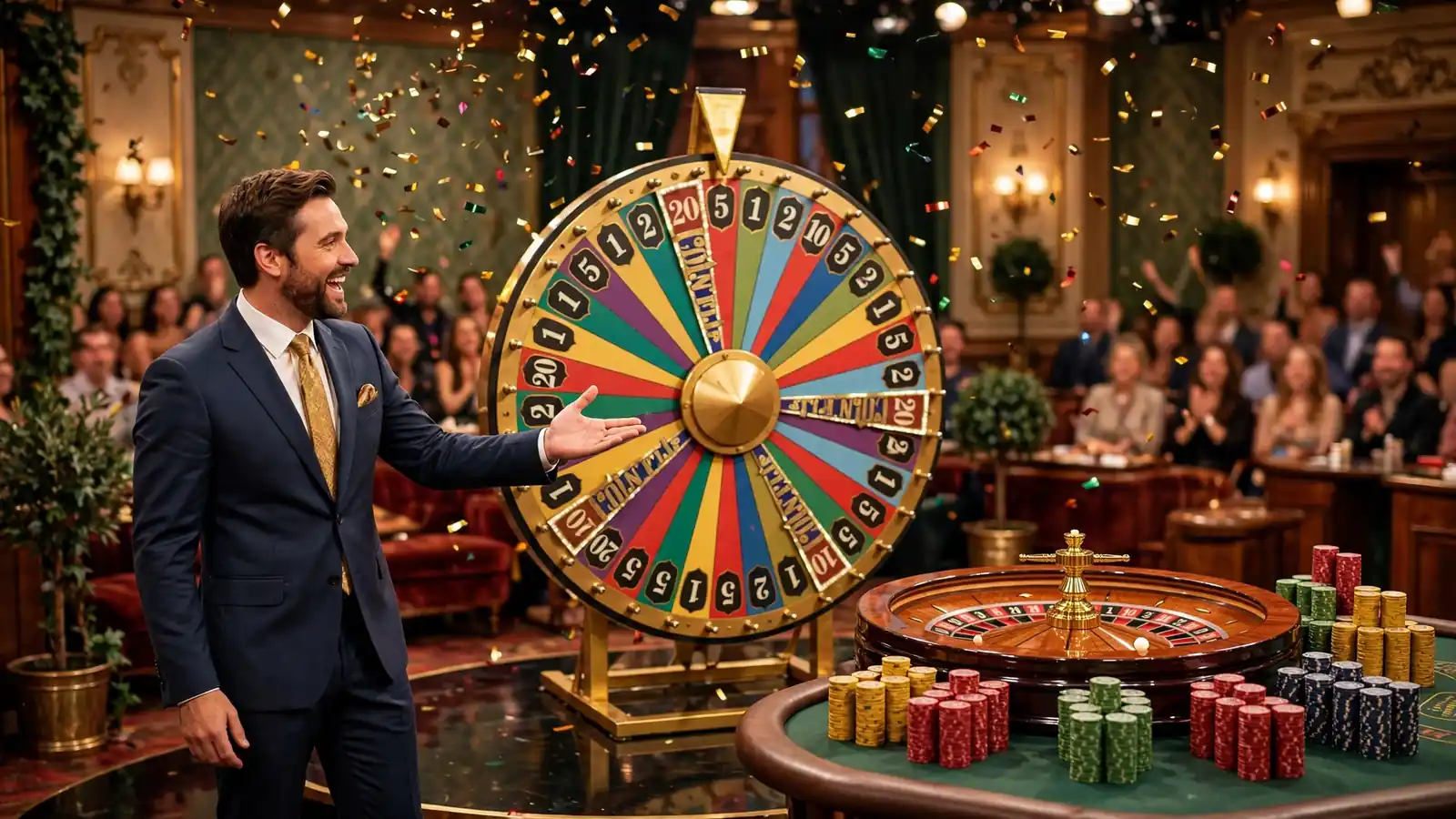
The guide covers UK licensing, player protections, access, bonuses and what game rules or demos can—and cannot—establish.
A casino’s appearance, game catalogue or use of a familiar brand does not establish that it may lawfully offer gambling to people in Great Britain. The relevant check is whether the business operating the service holds the appropriate licence from the UK Gambling Commission. The Commission regulates commercial gambling in Great Britain and oversees online gambling activity; its authority over remote gambling offered to people there does not depend on where the operator’s equipment is located.
The Gambling Act 2005 provides the framework for gambling in England, Wales and Scotland. Under that framework, the Commission grants operating licences to businesses and personal licences to individuals in relevant roles. These are distinct permissions: a company’s operating licence is not the same as an individual’s personal licence, and the existence of one should not be mistaken for the other.
For a casino associated with Crazy Time, the practical starting point is the operator’s identity and licence details, not simply the game name or a logo displayed on a website. Before depositing, the licence number should be checked against the UK Gambling Commission’s public register. The register can help establish whether the business named in the casino’s terms corresponds to a licensed operator. A mismatch between the brand, the legal business name and the details shown in the register merits further scrutiny rather than an assumption that the licence applies.
Deal or No Deal Casino UK: Slot Features Explained
A dated register finding illustrates why the check needs to be specific. A specialist casino review reported that the Commission’s public register, as dated 26 September 2026, did not show a LuckyPays entry under the brand or the stated domain, including luckypays.io. This is a finding about what that register identified on that date; it should not be expanded into a claim about every similarly named business, nor treated as a permanent description of the register. Where an operator’s identity or status is uncertain, the relevant question is whether the exact business serving the account can be matched to a current Commission licence.
The register check is only one part of assessing player protections. UK-licensed remote operators are subject to requirements governing customer accounts and safer gambling. They must verify a customer’s age before permitting a deposit, and new customers must be prompted to set a financial limit before their first deposit. Account-level limit controls must also be accessible. These measures relate to the account and its funding, rather than to any particular live game.
French Roulette Online Casinos in the UK: Rules
Payment rules are also relevant when reviewing how a casino accepts deposits. UK-licensed remote operators cannot accept credit-card payments for gambling, including credit-card funding routed through a money service business. They also cannot accept wallet payments where the wallet permits credit-card funds to be used for gambling. A payment option’s presence on a site is not, on its own, evidence that the operator is licensed or that the payment method is permitted.
Licensed casinos must provide responsible gambling tools, including self-exclusion. Operators must also offer an internal process for handling complaints and access to an approved Alternative Dispute Resolution service. The availability of those routes matters because it gives a customer a defined way to raise a dispute, rather than leaving the resolution entirely to informal contact with the casino.
These protections do not remove the financial risk of gambling. Only money that can be afforded to lose should be used for gambling, and account limits or self-exclusion tools should be understood as safeguards, not guarantees against harm. A licence indicates that the operator falls within the relevant regulatory system; it does not mean that a particular gambling outcome is safe or that every complaint will be resolved in the customer’s favour.
A careful review therefore separates three questions: which legal entity runs the casino, whether that entity holds the relevant Commission licence, and what account protections and complaint routes are available. The game title alone cannot answer any of them. A current register entry tied to the operator’s actual identity, together with clear account terms and accessible safeguards, provides a more useful basis for assessing regulatory status than promotional claims or branding.
Crazy Time sits within the online live-casino category, where a casino game is presented through a live broadcast rather than solely through a conventional computer-generated interface. The “game show” description points to a more produced style of presentation than a standard table-game layout. It does not, by itself, explain the rules, establish what outcomes are possible or show how a particular casino makes the game available.
"Live casino" describes the setting of the game, while "game show" refers to its specific style of presentation.
That distinction matters when interpreting the title. “Live casino” describes the setting in which a game is offered; “game show” describes its presentation. Neither phrase is a reliable substitute for the game’s own rules or for the information displayed by the operator. The name Crazy Time may therefore appear alongside familiar live-casino offerings without being interchangeable with traditional card or table games.
Online live casinos bring the atmosphere of a hosted game into a digital setting. A live feed can make the presentation feel closer to a studio or casino floor than to a conventional online game, while the actual experience still takes place through the casino’s website or app. The broadcast is only one part of that experience: the interface, account functions and the game’s own instructions also shape how it is encountered. These elements can differ between operators, so the category label alone cannot establish that two versions or presentations are identical.
Crazy Time is best understood in that broader setting rather than as a synonym for every live casino game. A casino may offer live tables and a game-show-style title within the same general section, but the formats serve different expectations. Table games are commonly presented around a dealer and a defined table layout; a game-show format places greater emphasis on a staged presentation. This is a distinction of format, not a claim about which option is more enjoyable or suitable.
The live element also needs careful interpretation. A live broadcast can provide a sense of immediacy, but it does not tell a viewer everything about how the game works. For that, the relevant source is the game’s rules and information shown within the casino interface. The screen design, host-led presentation or visual effects should not be treated as a complete explanation of settlement or other game conditions.
Crash Casino Games in the UK: Categories and Evidence
For a person exploring Crazy Time in a UK online casino, the wider live-casino context can help explain why the game appears beside other hosted titles. It does not establish that every casino has it, that every casino presents it in the same way, or that a particular title is available at a given moment. Availability is a separate matter from the category to which a game belongs. The operator’s game lobby is the practical place to see what it currently offers; this is distinct from evaluating the operator itself.
The history of live casino offerings in the UK predates the current prominence of game-show-style titles. Grosvenor introduced a live casino range in 2013, with card and casino games that included Blackjack, Texas Hold’em and Roulette. That launch is a useful historical marker: live casino was already being presented as a collection of hosted games, rather than as a single format or one particular title. It does not establish when Crazy Time became available in the UK, nor does it show that Grosvenor offered that game at launch.
This historical example also illustrates why “live casino” should be read as an umbrella category. A range may bring together several kinds of game, and the presence of a hosted card game does not mean that every other title in the section follows the same structure. Conversely, placing a game-show title in a live-casino lobby does not turn it into a conventional table game. The presentation and the underlying rules need to be considered separately.
The phrase “Crazy Time live casino” can refer to the game as encountered in that hosted online setting, rather than to a separate product category. In practical terms, the title belongs in a discussion of live casino when the relevant point is its presentation and place in an online casino lobby. More detailed questions—such as rules, scoring, possible outcomes or multipliers—require a different kind of evidence and should not be inferred from the live format alone.
The same caution applies to descriptions of the experience as interactive. Live-casino interfaces may combine a broadcast with on-screen controls and information, but the existence of a live feed does not establish which interactions a specific game supports. Nor does it show whether those features are available in the same form across desktop and mobile access. Those details depend on the particular implementation and should be checked in the game itself rather than assumed from its category name.
A live presentation can also create a strong impression of continuity: the game appears to unfold as an event, with a host and a visible setting. That impression is about how the content is delivered. It should not be confused with a guarantee about speed, fairness, or the range of outcomes. Those are separate claims that require evidence beyond the fact that a game is streamed or hosted.
Casino dice games in the UK: how they fit
In the UK context, the relevant terminology can therefore be kept straightforward. “Online casino” describes the wider service; “live casino” describes a mode of presenting games through a live feed; “game show” describes a style of presentation; and Crazy Time is the named game under discussion. Keeping those meanings separate avoids treating a search for a game-show experience as though it were automatically a request for a particular table game, operator or set of rules.
The live-casino setting may be part of the appeal for people who prefer a presented game over a purely digital interface. That preference is subjective, and the format alone cannot establish whether the experience will be engaging or appropriate for a particular person. Gambling carries a financial risk, so any play should be limited to money that can be afforded to lose. The visual energy of a show-style presentation does not change that basic consideration.
A useful way to approach the category is to treat the presentation as context, not evidence of every other feature. The live feed may explain why Crazy Time is grouped with hosted games; the title identifies the game; and the game’s own information explains its operation. Keeping those layers distinct makes it easier to understand what the term “live casino” contributes without reading extra claims into it.
A casino’s general live-games page is a sensible starting point when looking for Crazy Time. The game may be listed under its full name, within a live-casino category, or through a lobby search field. Searching for “Crazy Time” is more precise than looking for a wheel game: a casino can offer other wheel-based titles without offering this particular game.
Finding Crazy Time
Use the casino’s search field specifically for "Crazy Time" rather than generic terms like "wheel game".
Navigate to the live-casino section of the lobby to see if the title is listed.
Confirm availability on the specific version of the site being used, such as desktop or mobile.
A listing is evidence that the casino presents the title in its catalogue, but it does not establish that the game is available in every version of the site or at every moment. Casino websites can separate desktop and mobile lobbies, and menus can change. If a title does not appear in one category, checking the casino’s own game search or live-casino section may clarify whether it is listed elsewhere. Availability should be confirmed on the operator’s own site rather than inferred from a general description or an old third-party page.
The distinction between a live casino and a game listing also matters. A casino may advertise live tables or a broad live-game selection without naming Crazy Time. That does not confirm that this particular show is included. Conversely, a title page or lobby entry may identify the game even when the main live-casino page gives only a summary of the catalogue. The relevant indication is the specific game name, not the presence of a live-casino label alone.
A game’s appearance in a lobby should not be treated as an endorsement of the casino. It answers a narrow question—whether Crazy Time is presented as available there—not whether the operator is suitable or offers better conditions than another site. Those are separate matters from locating the title. In Great Britain, remote operators serving consumers must hold the relevant Gambling Commission licence; the game listing itself does not demonstrate that status.
Search results and promotional pages can help identify possible operators, but they can become outdated or describe a game without confirming its current presence in the casino lobby. A direct check of the casino’s own catalogue is therefore more useful for establishing availability. The casino’s terms and access conditions should also be read before an account is funded, since a title listing alone does not explain those conditions.
Mines Casino Game in the UK: What Is Verified
For UK players, legal online gambling is restricted to sites holding a UK Gambling Commission licence, and operators must verify a customer’s age before allowing a deposit. Checking the operator’s licence number on the Commission’s public register before depositing is part of that separate operator check, not a method of identifying the game. No casino listing removes the need to consider whether gambling is affordable: only money that can be lost without affecting essential costs should be wagered.
A “best” Crazy Time casino cannot be identified from the game title alone.
A more useful assessment separates the game from the surrounding service. The game itself does not establish whether a casino’s account terms, payment arrangements or customer support are suitable. Nor does a casino’s promotion, by itself, show that its overall offer is preferable. These are distinct parts of the experience and should be examined on their own terms.
For a like-for-like comparison, the relevant questions concern how clearly each operator explains its conditions, how accessible its support is and whether its account processes are transparent. Claims about bonuses merit particular care: promotional wording should be read alongside the attached terms, rather than treated as a feature of Crazy Time. A bonus may have conditions that affect its practical value, so headline language alone cannot support a ranking. The terms of any deposit offer are a separate consideration from the game.
Attention Promotional wording for bonuses should be read alongside the attached terms, as headline language alone cannot support a ranking.
The same caution applies to descriptions of strategy and results. A casino’s presentation of Crazy Time does not establish that a particular approach improves outcomes, or that past results predict future ones. A sequence of previous results is descriptive, not proof of what will happen next. Comparing casinos on the basis of an asserted winning strategy or a short run of results would therefore confuse claims about chance with evidence about the operator.
Comparisons also depend on the purpose of the assessment. Someone looking for a clear explanation of terms may prioritise different features from someone comparing account tools or customer-service information. Brand familiarity or the prominence of a promotion is not, on its own, a reliable measure of suitability.
The UK regulatory setting is one relevant part of any wider assessment. That requirement does not, by itself, establish that one licensed casino offers a better Crazy Time experience than another. Regulation is a baseline, not a comparative score.
“Best” may mean clearer terms, more accessible support or a particular account feature, but each claim needs evidence tied to that feature. The more precise conclusion is that casino options can be assessed against specific, disclosed criteria, while the game’s name alone cannot settle the comparison.
Claims about a Crazy Time strategy need to be separated from evidence about the game and from rules that apply to other gambling products. A staking pattern, a record of previous results or a proposed way to choose wagers may be described as a strategy, but that description does not demonstrate that it improves outcomes. A persuasive claim would need reliable evidence showing how the method was tested and what it can establish. Without that, it is more accurate to treat it as a suggestion than as a proven advantage.
Chicken Road Casino UK: Game Format and Access
The same caution applies to trackers. A tracker can organise recorded information, but a record of past events is not, by itself, evidence that future events can be predicted. Nor does a chart become a reliable strategy simply because it contains a large amount of data. The method used to collect and interpret the information matters; conclusions that cannot be checked independently should not be treated as established.
A search for Crazy Time’s history raises a separate issue. Historical claims require identifiable dates and sources, not inference from present-day strategy advice or tracking tools. Without dependable evidence for a particular account of the game’s development, claims about its origins or historical patterns cannot be responsibly presented as fact.
Stake rules should also be kept distinct from strategy. A specialist gambling review reports that Great Britain’s online slot limits are £2 for an adult aged 18 to 24 and £5 for someone aged 25 or over, measured per game cycle. The same review says those limits do not cover roulette or blackjack. These figures concern online slots; they do not establish that the slot limits apply to Crazy Time. A game’s live presentation or a casino’s description is not enough to determine how a particular regulatory rule applies.
For a Crazy Time wager, a slot stake limit should therefore not be assumed to settle the question. The product’s regulatory classification and the relevant current rules would need to support that conclusion. Strategy advice cannot answer that legal question, and a tracker cannot do so either. Keeping the categories separate avoids turning rules for one type of game into an unsupported claim about another.
Financial Risk
Only money that can be afforded to lose should be used for gambling; no strategy or historical record can guarantee a result.
No strategy can remove the possibility of losing. Gambling should be limited to money that can be afforded to lose, and no betting pattern or historical record should be treated as a guarantee of a particular result.
“Free” can describe different kinds of access, and they should not be treated as interchangeable. A no-cost version of a casino game would allow play without placing a cash wager; free spins, by contrast, are promotional turns that may be tied to an offer. Neither phrase alone establishes that Crazy Time is available without a deposit at a particular casino.
A casino page or review may use “free” to attract attention, but the wording needs to be read in context. It may refer to a general game catalogue, a promotion for another title, or access that still requires an account or qualifying payment. A claim about Crazy Time itself should make clear what is offered and what conditions apply. If those details are absent, the claim is not enough to establish that the game can be played for free.
The same distinction matters for free spins. Their presence in an advertisement does not, by itself, show that they can be used on Crazy Time. The offer should identify the eligible game and state any restrictions on claiming or using the spins. Without that information, it is not possible to infer that a free-spin promotion applies to this live casino game.
Live Dream Catcher Casino in the UK: What to Check
Reviews can help describe how a promotion is presented, but a review’s wording is not a substitute for the casino’s current terms. Promotional availability can change, and an old review may describe an offer that is no longer active. A clear claim should therefore be checked against the live offer and its stated conditions before it is relied upon.
Free access should also be kept separate from a demonstration mode. A demo concerns viewing or trying a game in a non-wagering setting; it is not proof of a no-deposit promotion or free spins. These forms of access answer different questions, even when pages use similar language.
Where access leads to real-money gambling, the UK’s legal age is eighteen and the operator must hold the relevant Gambling Commission licence. Free access does not remove the need for care if play later involves money. Gambling should be limited to what can be afforded to lose.
A casino promotion is an offer from the operator, not a feature of Crazy Time. References to a Crazy Time bonus may describe a general casino promotion rather than a reward tied specifically to the game. The distinction matters: promotional wording should be read alongside the offer’s terms, rather than treated as part of the game’s rules or payouts.
Welcome offers and deposit bonuses can involve conditions on eligibility, qualifying deposits, which games count towards playthrough, withdrawal restrictions and when an offer expires. The exact terms vary by promotion. A headline amount alone does not establish how much can be withdrawn, whether Crazy Time contributes to any wagering requirement, or whether a particular offer applies to existing customers as well as new ones. Those points need to be stated in the operator’s terms before the promotion can be assessed.
UK-licensed remote operators cannot accept credit-card payments for gambling, including those routed through money service businesses or certain wallets.
A no-deposit bonus is also distinct from playing without depositing. It is a promotional credit or reward, if offered, and may carry its own conditions. It should not be assumed to provide unrestricted access to a game or to be withdrawable as cash. Free play and demo access are separate topics.
Deposit conditions require separate scrutiny from bonus terms. Payment methods, minimum deposit requirements, processing arrangements and withdrawal rules are operator-specific; a promotion does not make those conditions uniform across casinos. In Great Britain, remote gambling operators cannot accept credit-card payments for gambling, including credit-card funding routed through a money service business. They also cannot accept wallet payments where the wallet permits credit-card funds to be used for gambling.
Searches for casinos “not on GamStop” should not be treated as a way to identify a bonus category. A promotion does not alter an operator’s regulatory status or the protections that apply to a gambling account. Bonus claims, payment rules and the game itself are separate matters, and none should be inferred from the wording of another. Regardless of an offer, gambling should be limited to money that can be afforded to lose.
A title such as Crazy Time casino rules can refer to several distinct things: how a round proceeds, what counts as a score, and how any multiplier affects a result. These should not be treated as interchangeable. A multiplier is a value applied under a game’s rules; it is not itself a score, and the word “score” may describe a displayed result rather than a separate game mechanic.
For Crazy Time, those distinctions matter when interpreting descriptions. A page or screen that displays a result may help explain that particular instance, but it cannot by itself establish every possible outcome or the full rules.
The same caution applies to descriptions of live play. “Live casino rules” can refer to the game’s mechanics, while live presentation describes how a session is delivered. Neither phrase confirms the other. Claims about what triggers a feature, how a score is calculated or when a multiplier applies require an identifiable rules source that sets out those mechanics.
JetX Casino Game in the UK: Format and Play
A trusted description should distinguish a confirmed rule from an interpretation and avoid turning an isolated display into a general promise. This is especially important for scores: a result shown during play is not evidence that the same result, multiplier or payout will recur. Casino labels or promotional summaries are not a substitute for clear game rules.
Specific mechanics should be reported only when they can be checked against the game’s published rules; without that basis, precise values would imply more certainty than is warranted.
A Crazy Time demo, when a casino offers one, is a way to preview or try a version of the game without treating it as a real-money session. The word “demo” alone does not establish what is provided: it may refer to an interactive simulation or simply a viewing preview. Those formats offer different kinds of information.
An interactive version can help show how its on-screen layout and controls are arranged. A video preview may show presentation, but does not let someone test those controls. Neither should automatically be treated as proof that the same experience, features or operating conditions will apply in a real-money game. A demo can also be separate from a live casino session; the label does not, by itself, confirm that it connects to a live game.
The term “slot demo” can be misleading in this context. Calling a game a slot in a search or menu does not establish its classification, and a demo label does not confirm the game’s format.
Availability is a separate matter from the meaning of the label. A casino’s description should make clear whether it offers an interactive trial, a video or another kind of preview, and whether access involves any conditions. A demo is not evidence that a real-money version is available at the same venue. Any real-money gambling should remain within what can be afforded to lose.
The maximum stake is £5 per game cycle for adults aged 25 and over, and £2 for adults aged 18 to 24. These limits do not apply to roulette or blackjack.
Yes. Commercial online gambling offered to consumers in Great Britain is regulated by the UK Gambling Commission, and the operator must hold the relevant licence.
The Commission’s public register dated 26 September 2026 did not identify a LuckyPays entry under that brand or its stated domain, including luckypays.io. Check the current register against the exact legal business operating the casino.
Prepared by the goldwincasin editorial staff.