
 Available in GB
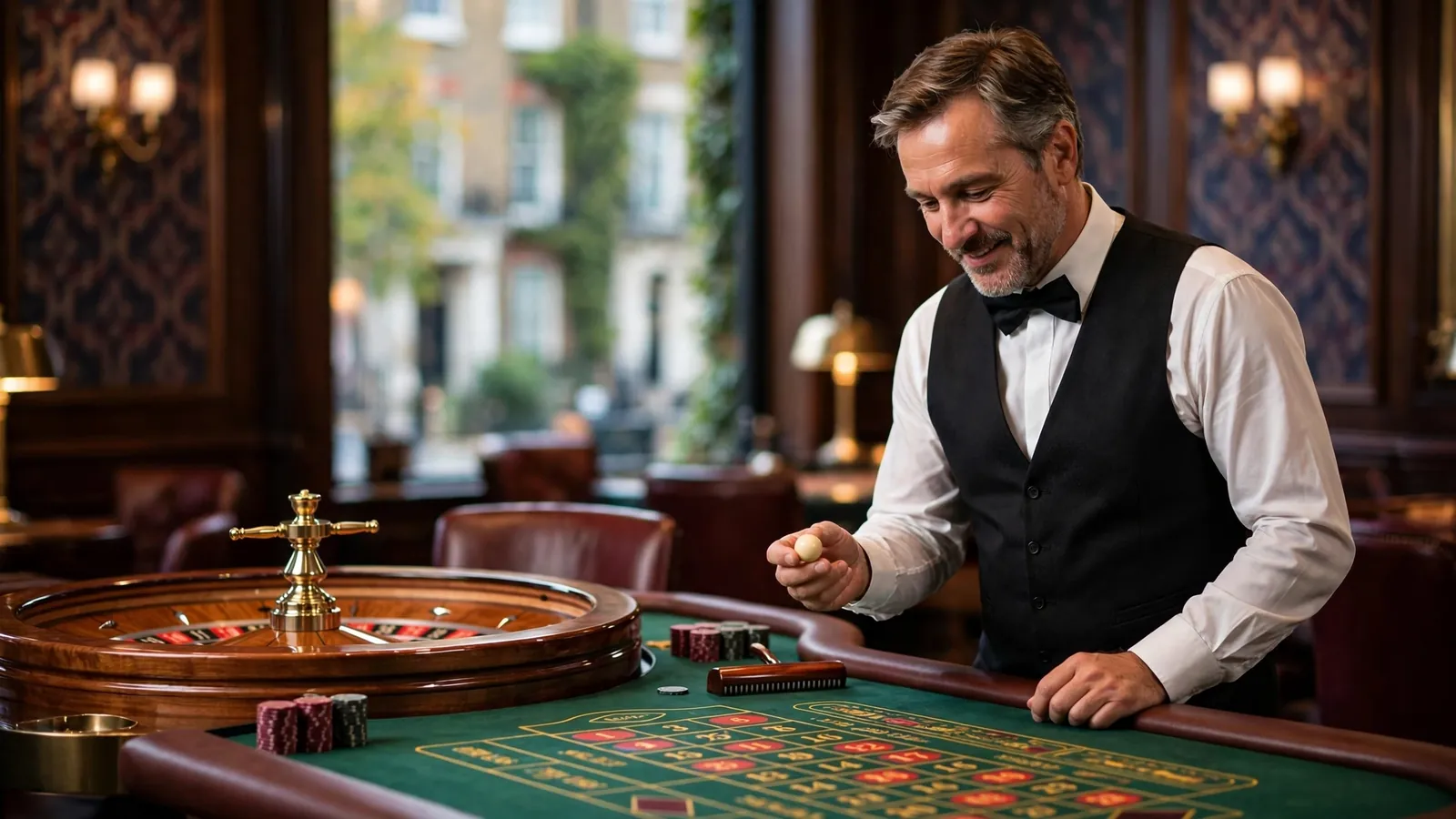
The guide covers UK licensing, table play, game variants and the limits of claims about bonuses, free play and winning.
A live roulette service offered for real money to customers in Great Britain falls within the country’s remote gambling framework. The central requirement is that the operator holds the relevant licence from the UK Gambling Commission. This applies even when the business, studio or other key equipment is based outside Great Britain: the location of the equipment does not remove the licensing obligation for an operator serving consumers in the market.
The Commission regulates gambling activity across the United Kingdom, including online casinos, and is the sole regulator for commercial gambling in Great Britain. The Gambling Act 2005 provides the main statutory framework for gambling in England, Wales and Scotland; Northern Ireland has a separate legal position. For a roulette casino serving Great Britain, the practical point is that offering the game remotely is not outside regulation simply because it takes place online or because the operator is established elsewhere.
A licence is not just a general endorsement of a company. The Commission issues operating licences to businesses and personal licences to individuals who carry out relevant roles in gambling operations in Great Britain. These are different forms of authorisation: the business licence concerns the operator, while personal licences concern individuals whose work falls within the applicable licensing system. A casino’s marketing language or the presence of live tables cannot substitute for the required authorisation.
This distinction matters when assessing a roulette casino in the UK. A site may present itself as British-facing, use familiar currency or describe its games as suitable for local customers; none of those details establishes that its operator has permission to offer remote gambling in Great Britain. Nor does the physical location of a dealer or studio settle the question. The relevant issue is whether the business offering the gambling holds the appropriate Gambling Commission licence for its activity.
Mines Casino Game in the UK: What Is Verified
The public register is the place to verify an operator’s status. Before depositing, the licence number should be checked against the UK Gambling Commission’s register, with attention to whether the listed business and the service being offered correspond to the casino under review. A brand name and the licensed legal entity may differ, so a check should not stop at a logo or a statement on the site. The register is evidence of regulatory status; promotional claims alone are not.
Licensing also gives the regulatory relationship a defined subject. The Commission’s authority concerns the operator and, where relevant, licensed individuals—not the roulette game as an abstract product. A roulette table being described as “live” does not create a separate exemption from the rules governing remote gambling. If real-money play is offered to consumers in Great Britain, the operator must meet the licensing requirement regardless of whether the table is streamed from a domestic or overseas location.
That is why a licence check should come before judgments about presentation or apparent convenience. An attractive interface, a detailed description of a table, or a claim of local service does not answer whether the business is entitled to provide the gambling. The register check establishes a more important threshold: whether the operator appears in the Commission’s records with the relevant authorisation. It does not, by itself, establish that every aspect of a particular service is suitable or that every claim made by the operator is accurate.
The age requirement is another part of the regulated setting. Operators must verify a customer’s age before permitting deposits into a gambling account. This is an operator obligation, not a substitute for checking the business’s licence. A site asking for age details does not thereby demonstrate that it is licensed, just as a licence entry does not remove the need for the operator to carry out required checks.
The legal framework therefore gives a straightforward basis for evaluating a UK roulette casino: identify the business behind the service and confirm its relevant authorisation on the Commission’s public register before depositing. The check should be made against the regulator’s records rather than inferred from branding, equipment location or the wording used to describe a table. Gambling should be limited to money that can be afforded to lose.
Verifying Operator Status
Online live roulette brings a casino table to a screen through a live video feed. A dealer conducts the game at a physical table, while participants follow the action remotely and use an on-screen interface to take part. The format is therefore different both from attending a casino in person and from playing a computer-generated roulette game.
At a land-based table, the wheel, layout and dealer are present in the same room as the players. The game is observed directly, and participation takes place at the physical table. In an online live game, the table is shown through a camera feed, and actions are entered through the website or app interface. The participant sees the dealer and table on screen rather than sharing the casino floor.
This distinction also separates live roulette from versions in which software generates the wheel’s results and displays an animated or digital game. A live table uses a physical roulette setup in the streamed game; a software version is not a broadcast of a dealer operating a table. Both formats can appear within an online casino, but the word “live” refers to the streamed table format, not simply to a game being available online.
The interface combines video with controls. The video presents the table activity, while the digital layout lets a remote participant interact with the game. This arrangement is not identical to placing chips on a felt layout in person: the interface translates the physical table’s activity into on-screen controls. The exact design can differ between services, so the general format should not be mistaken for a promise that every online table has the same layout or presentation.
Live Dream Catcher Casino in the UK: What to Check
Live play is also not the same as a recording. Its defining feature is that the table activity is streamed as it happens, with the remote interface connected to the ongoing game. That makes the experience dependent on both the video presentation and the digital means of participation. A delay in the stream or a connection interruption may affect what is visible, although the handling of interruptions depends on the operator’s procedures and cannot be assumed to be identical across sites.
The phrase “online live roulette” can describe the format without establishing details about a particular table. It does not, by itself, confirm which provider supplies the game, where a table is located, what languages are spoken, or whether a dealer will speak English. Those points need to be established from the specific table or operator information. A page using the words “English-speaking dealer” should therefore be read as making a specific claim about a service, not as describing an inherent feature of live roulette.
The historical record of online casino offerings shows that live games have been presented as part of a wider casino selection. Grosvenor first introduced its live casino games in 2013, with Blackjack, Texas Hold’em and Roulette among the games offered. This gives a dated example of roulette appearing in a live-casino setting, but it does not establish the current details of any individual table or the languages available to its participants.
For a person comparing a roulette casino online with a physical casino, the central difference is the setting and method of interaction. The online participant watches through a screen and uses controls rather than handling physical chips at the venue. For someone comparing online live roulette with a digital roulette game, the key distinction is the streamed physical table rather than a result produced and displayed solely by software. Neither distinction, on its own, says anything about the quality of a particular service.
The live format may make the table activity visible, but a video feed is not a substitute for checking the terms and information attached to a specific game. Descriptions of language, access and table features should be treated as individual service details, not inferred from the word “live.” This matters especially when the intended experience depends on communicating with a dealer: the format alone does not verify that such communication is available in English.
Online access changes how roulette is viewed and joined; it does not make a remote participant physically present at a casino table. The defining elements are a live table feed and a digital interface for remote participation. Any further claim about a specific casino, dealer or language requires separate confirmation. Gambling carries financial risk, and only money that can be afforded to lose should be wagered.
A casino site may offer roulette alongside online slots, but rules that apply to one game category should not be assumed to govern the other. This distinction matters when comparing roulette casinos in Great Britain: a restriction reported for slot stakes is not, by itself, a measure of the permitted roulette wager or of a roulette table’s terms.
A specialist review reports that the online slot stake ceiling in Great Britain is £5 for a game cycle when the customer is aged 25 or over, and £2 for customers aged 18 to 24. The review also states that these limits do not extend to roulette or blackjack. These are claims about the rules described by that source, rather than a basis for treating every casino game as subject to the same stake cap. As the information is drawn from a single review and the subject can change, the figures should not be generalised beyond the scope in which they are reported.
Online casinos without ID in the UK: what to know
For a roulette casino site, the practical implication is one of category, not exemption from regulation. A slot-specific stake restriction does not set the roulette table’s maximum wager, determine its minimum wager, or describe the conditions attached to a roulette game. Those details need to be considered as roulette terms in their own right. Conversely, a casino’s roulette offer cannot be used to infer how its slots are governed. A site may carry both formats, but rules relevant to each should be kept separate.
This separation also prevents misleading comparisons between casinos. A larger permissible wager on roulette would not establish that a site is better for roulette, just as a slot stake limit would not indicate the quality, range or availability of roulette tables. Comparing sites on the basis of a single figure risks treating different games as though they shared the same mechanics and regulatory treatment. The relevant question is whether a stated condition concerns roulette or another game, and whether it is presented clearly for the table being considered.
The distinction is especially important where a casino’s product pages group games under a broad “casino” label. That category can contain slots and table games, but a rule tied to online slots should not automatically be read across the entire catalogue. Nor should a statement about roulette be taken as evidence about a slot’s stake conditions. Accurate descriptions identify the game type to which a condition applies.
Stake Limits
A specialist review reports that online slot stake ceilings in Great Britain are £5 for customers aged 25+ and £2 for those aged 18-24, but these limits do not extend to roulette or blackjack.
In Great Britain, remote gambling operators serving consumers are required to hold the relevant Gambling Commission licence. That licensing framework is separate from the narrower question of which stake rule applies to a particular game. A site’s status and the rules governing a game are related parts of an assessment, but one does not answer the other: a slot limit does not establish licensing status, and a licence does not make slot-specific restrictions applicable to roulette.
Casino-site comparisons should therefore distinguish roulette from slots before drawing conclusions about wagering conditions. For roulette, the table’s own published terms are the pertinent information; the slot figures reported by the specialist review should not be substituted for them. Any licence number should be checked on the UK Gambling Commission’s public register before a deposit is made. Gambling should be limited to what can be afforded to lose.
Roulette sits within a broader live-casino category that includes card games and other table formats. Its place in that mix matters because a casino’s table selection is not defined by roulette alone. A live offering may bring several kinds of games together, giving the section a wider identity than a single wheel or table. The presence of roulette therefore describes one part of a live casino, rather than the full range of activity associated with it.
Grosvenor’s live-casino launch provides a dated example of that wider selection. The operator first unveiled live casino games in 2013, with an offering that included Blackjack, Texas Hold’em and Roulette alongside other card and casino games. That combination places roulette among established table-game categories rather than treating it as a standalone live product. It also shows that live casino was presented as a collection of game types from the outset of Grosvenor’s launch, not simply as a roulette service.
The three named games indicate different areas of the table-game landscape. Blackjack and Texas Hold’em are card games; Roulette is a wheel-based casino game. Their inclusion in one live offering demonstrates breadth, but does not establish how many tables were available, how frequently they operated, or whether the selection later changed. Those details should not be inferred from the launch description.
For someone considering a UK roulette casino, the distinction between a roulette title and a broader live-casino range can help clarify what is being assessed. A site may be discussed in relation to roulette while also presenting other table games. The broader catalogue can be relevant to the character of the casino, but it does not by itself establish the quality, availability or suitability of any individual roulette table. Nor does a selection of named games reveal the terms attached to them.
The launch history also needs to be kept in proportion. A dated announcement establishes that Grosvenor introduced live casino games in 2013 and identifies examples from its range at that time. It does not establish the present state of the operator’s catalogue. Game menus can change, and a historical launch description should not be treated as a current inventory. A current assessment of any particular casino requires evidence that relates to its present offering.
Online American Roulette Casinos in the UK
This distinction applies across the category. Roulette casino games may appear within a live table section that also contains card games, but the presence of other games does not alter what roulette is. It instead places roulette in the wider context of a casino’s table selection. The relevant comparison is therefore between the scope of a live-casino catalogue and the specific game being considered, rather than assuming that a broad range guarantees a particular roulette experience.
Grosvenor’s example is useful for describing that context, not for ranking operators or making claims about present-day choice. It establishes a historical point and a range that included Roulette, Blackjack and Texas Hold’em. Beyond that, conclusions about a current live-casino selection need current, operator-specific information. For an evidence-led account, the boundary between a confirmed launch detail and a present claim should remain clear.
A claim that one casino is the best place to play roulette needs a clear basis: the operators compared, the criteria used and evidence that those criteria have been checked. Without that information, a ranking is not a reliable guide. A more defensible assessment begins with whether the individual site is authorised to offer remote gambling to customers in Great Britain.
The Gambling Commission requires remote operators serving consumers in Great Britain to hold the relevant licence. Before depositing, verify the operator’s licence number on the Commission’s public register and check that the registered business and permitted activity correspond to the casino being assessed. A familiar brand name, polished website or live table does not establish that the site itself is covered by a current licence.
Online European Roulette Casinos in the UK
A specialist casino review reported that a check of the public register dated 26 September 2026 did not find an entry for LuckyPays under that brand or its stated domain, including luckypays.io. This is a dated report about a register search, not a permanent conclusion about the operator’s status. Register information can change, so the current entry should be checked directly before any deposit. Where the operator’s identity or licence cannot be matched, a favourable roulette assessment cannot resolve that uncertainty.
Once licensing is established, comparisons can be made against details that are available and relevant to roulette. Published game rules, table limits and the terms attached to a table can help describe what is offered. For a live table, the information should identify the particular game and its applicable conditions; a general statement about a casino’s table selection is not enough to support claims about every table. The same care applies to claims about odds: the game’s rules and paytable, rather than an operator’s promotional wording, are the appropriate material for checking them.
A casino’s “maximum bet” is also not a useful single figure unless its scope is clear. The permitted stake may depend on the particular table or wager, so a number detached from those conditions would not support a fair comparison. Likewise, the number of roulette tables alone says little about their suitability or terms. Assessments should distinguish verifiable details from broad labels such as “best odds” or “best live casino”.
Searches for a roulette strategy do not establish that a particular casino improves a player’s prospects. Operator comparisons can describe products and conditions, but they should not imply that choosing a site makes roulette outcomes predictable. If a ranking omits its method or relies on claims that cannot be checked, it is more accurate to treat it as an opinion than as an evidence-based result.
Licensing Risk
Do not deposit funds until you have verified the operator’s status on the Gambling Commission’s register; branding and live tables do not prove legal authorisation.
A careful assessment therefore separates authorisation, game-specific information and promotional claims. No single “best” label can substitute for those checks, and comparisons should not obscure the status of the operator. Roulette involves financial risk; only money that can be afforded to lose should be wagered.
Playing roulette at a live casino involves selecting a wager through the table interface while a dealer conducts the game. The precise layout and controls can differ between games, so the displayed instructions are the appropriate guide to where wagers can be placed and when betting closes. A live dealer does not make the process identical to placing a wager at a physical table: selections are made on screen, and the game’s interface records them.
A typical round gives players a period to place wagers before the dealer sets the wheel in motion. The interface may offer choices linked to individual numbers or groups of outcomes. Once betting closes, the wager for that round cannot be changed; the result is then shown in the live feed and recorded by the game. The steps are straightforward, but the timing matters: a selection must be submitted before the table closes betting.
For anyone learning how to play roulette at a casino, it is useful to distinguish understanding the interface from predicting the result. The first is a practical matter: identify the available wager areas, check the selection shown on screen, and confirm that the wager has been accepted for the current round. None of those actions establishes that a particular selection is more likely to win. Roulette remains a gambling activity, and no pattern or sequence of clicks can guarantee a return.
Roulette should also be kept distinct from online slots when considering stake rules. A specialist review reports that Great Britain’s online slot stake limits do not apply to roulette or blackjack. That distinction is specific to those slot limits; it should not be read as a general statement that roulette tables have no rules or that every operator handles wagers in the same way. Table terms and the available controls remain relevant.
Live Baccarat Online Casinos in the UK: Licensing
Before depositing, the operator’s licence number should be checked against the UK Gambling Commission’s public register. Operators must verify a customer’s age before allowing a deposit, and new customers must be prompted to set a financial limit before their first deposit, with account-level limit controls available. Those safeguards do not change the uncertainty of the game.
Free access and real-money play are not interchangeable: a practice table, where offered, may not reflect the conditions of a paid game. Availability varies, so no particular free mode should be assumed. For real-money play, only wager what can be afforded to lose.
A roulette promotion may be described as a welcome offer, a deposit match, a live-casino reward or a no-deposit bonus. Those labels do not establish what an offer actually covers. The relevant terms determine whether roulette wagers qualify, whether a promotion is restricted to particular games, and what conditions apply before any resulting balance can be withdrawn.
For a UK player, a headline advertising a casino bonus is not enough to show that it applies to live roulette. A promotion might be limited to other casino products, available only to particular account holders, or subject to conditions that affect how it can be used. The same caution applies to offers linked to a named game such as Lightning Roulette: its presence in promotional wording does not, by itself, confirm eligibility or the terms of play.
A no-deposit offer and a deposit bonus are also different types of promotion. The first is presented without requiring an initial deposit; the second is tied to one. Neither label alone establishes the value, eligible games, restrictions or withdrawal conditions. Likewise, calling an offer a live-casino bonus does not prove that every live table is included.
The distinction matters because promotional language can compress several conditions into a short headline. The full terms should identify the eligible games and explain any wagering conditions, time limits, account restrictions and withdrawal rules. Those details need to be checked against the offer currently displayed by the operator; wording on an old page or in a general advertisement may not describe an active promotion.
Online Casino Tournaments in the UK: Rules and Claims
A bonus should not be treated as additional cash with no conditions. Its practical value depends on the terms and on whether roulette play counts towards them. Where those points are unclear, the offer cannot be assessed reliably from its label alone. No promotion changes the need to gamble only with money that can be afforded to lose, and a bonus should not be a reason to wager more than intended.
This applies equally to a roulette welcome offer, a deposit promotion or a live-table reward. A clear offer can be evaluated from its published terms; a broad claim without accessible, specific conditions cannot establish what a player will receive or how it may be used.
A request for free roulette may refer to a way to explore a roulette table without wagering real money. That is distinct from real-money play, but the distinction alone does not establish that a particular casino offers a free table, which roulette formats it includes, or whether access is available in Great Britain. No operator can be identified on that basis.
The same caution applies to French Roulette and Fireball Roulette. Their names may appear in descriptions of casino games, but a name does not confirm that a free version is available or explain how a particular table works. Availability and rules need to be checked against the relevant operator’s own current information. It would be unsafe to infer table features from a game title alone.
A casino’s roulette rules are relevant whether a table is described as free or played for money. However, the label does not establish the rules that apply, and details should not be assumed to be identical across tables. Information about a specific French Roulette table, for instance, would need to identify that table and set out its rules clearly before any comparison could be made.
The same standard applies to claims about the casino edge. A figure cannot be responsibly attached to a named table without reliable information about its rules and the basis for the calculation. A general label such as “French Roulette” is not enough to establish the edge of a particular offering.
Attention: Free play modes are for exploration and do not guarantee that the same rules, tables, or experience will be available in real-money play.
Free play, where offered, should also not be treated as evidence about the terms of real-money play. It does not establish that the same table, rules or experience will be available when wagering money. Nor does the presence of a game description prove that a no-cost mode exists.
Before depositing, the casino’s licence number should be checked against the UK Gambling Commission’s public register. Operators must verify a customer’s age before permitting a deposit. Any move from no-cost play to real-money gambling changes the financial stakes; only money affordable to lose should be wagered.
A roulette result cannot be made certain by a betting system. Claims that a particular sequence of wagers will win every time, or that a method can reliably turn play into profit, should therefore be treated with caution. A strategy may describe how wagers are arranged, but that description does not establish that it can control the result of a spin.
This distinction matters whether roulette is played online, at a physical casino table or on an electronic table. Changing the setting does not make a guaranteed outcome possible. Nor does a longer session or a chosen pattern of wagers provide a sound basis for promising a win. The language of a “best way” to win can suggest that one method has been shown to outperform others, but such a claim needs evidence rather than confidence or repetition.
A useful assessment separates a plan from a prediction. A plan sets out what a player intends to wager and how to respond to results; a prediction asserts what will happen. The first can be described without implying that the second is knowable. Systems based on increasing, reducing or rearranging wagers may affect the size and timing of losses, but that alone does not demonstrate a reliable route to profit.
The same caution applies to claims about electronic roulette. A different interface does not, by itself, make a winning approach dependable. Advice that presents a staking pattern as a way to overcome uncertainty should not be mistaken for proof that it changes the outcome.
No method can honestly be presented as a guaranteed way to win roulette every time. Any discussion of tactics should avoid turning a possible approach into a promise, and should make clear that a sequence of wagers does not remove the risk of losing. Roulette is gambling, so only money that can be afforded to lose should be wagered.
Lightning Roulette is a named live roulette product, rather than a general label for every roulette table streamed by an online casino. That distinction matters when a casino lists both standard live roulette and themed variants: the product name identifies a particular offering, while the wider live-casino category covers different tables and games.
The name alone does not establish how the game works, what odds apply, or whether a specific UK casino currently carries it. Those details should be checked against the casino’s own game listing and the information displayed for the table. A listing can confirm that the title is offered, but claims about rules or payouts require the relevant game information, not assumptions based on the name.
“Lightning Roulette slots” can also cause confusion. Despite the word “slots” appearing in some descriptions or searches, Lightning Roulette is presented as a roulette title, not as an online slot. Slot-specific requirements should not be transferred to it simply because the two products appear in the same casino lobby.
The same care applies to references to a first-person version or to casino scores. Such labels do not, by themselves, explain the format, indicate an official rating, or establish availability. A meaningful comparison needs identifiable details about the product and the source of any score.
For UK players, the operator remains a separate consideration from the game title. The Gambling Commission regulates remote gambling offered to consumers in Great Britain, and operators serving that market must hold the relevant licence. A recognised game name is not evidence of an operator’s regulatory status. Roulette remains gambling, so only money that can be afforded to lose should be risked.
The limit is £5 per game cycle for adults aged 25 and over, and £2 for adults aged 18 to 24. These limits do not apply to roulette or blackjack.
Yes. Remote casino operators serving consumers in Great Britain must hold the relevant UK Gambling Commission licence, regardless of where their key equipment is located.
The Commission’s public register dated 26 September 2026 does not show an entry for LuckyPays or luckypays.io, so its licence cannot be verified under that brand or domain.
Prepared by the goldwincasin editorial staff.